Breed Standard for Russian Toy FCI No. 352
Official breed standard for the Russian Toy (Russkiy Toy) FCI No. 352. Complete description of appearance, size, colors, temperament, and disqualifying faults.
Contents
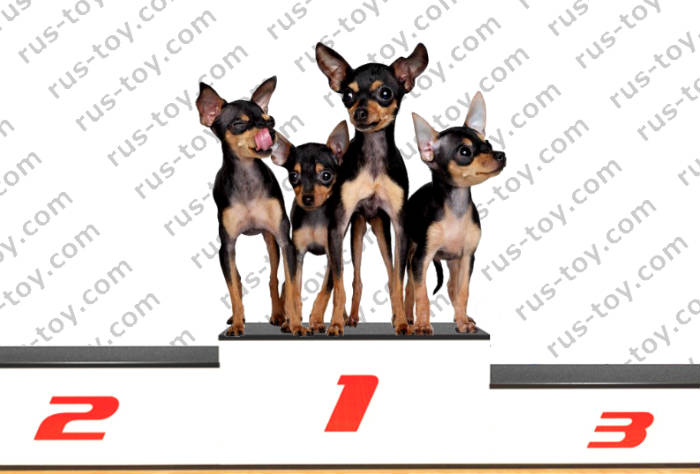
The breed standard is an official document describing the ideal characteristics of a dog of a specific breed. The FCI standard No. 352 for the Russian Toy was adopted on December 5, 2017.
General Information
| Parameter | Value |
|---|---|
| FCI Standard Number | 352 |
| Country of Origin | Russia |
| Publication Date | 12.05.2017 |
| FCI Group | 9 — Companion and Toy Dogs |
| Section | 9 — Continental Toy Spaniels and Russian Toy |
| Purpose | Companion Dog |
| FCI Recognition | Provisional — 21.02.2006, Final — 07.11.2017 |
Brief Historical Background
In the early 20th century, the English Toy Terrier was one of the most popular decorative breeds in Russia. However, during the period from 1920 to 1950, the breeding of purebred Toy Terriers practically ceased, and the number of dogs fell to a critical level.
Only in the mid-1950s did Russian cynologists begin to revive the breed. Almost all dogs used for breeding had no pedigrees, and many were not purebred. The standard drawn up for Toy Terriers differed significantly from the standard of the English Toy Terrier.
October 12, 1958 — an important date in the history of the breed. From two smooth-haired dogs, one of which had slightly elongated hair, a male was born with striking fringes on the ears and limbs. Thus, the long-haired variety — Moscow Long-haired Toy Terrier — was born. A significant role in the creation of this variety was played by Moscow cynologist Evgeniya Fominichna Zharova.
General Appearance
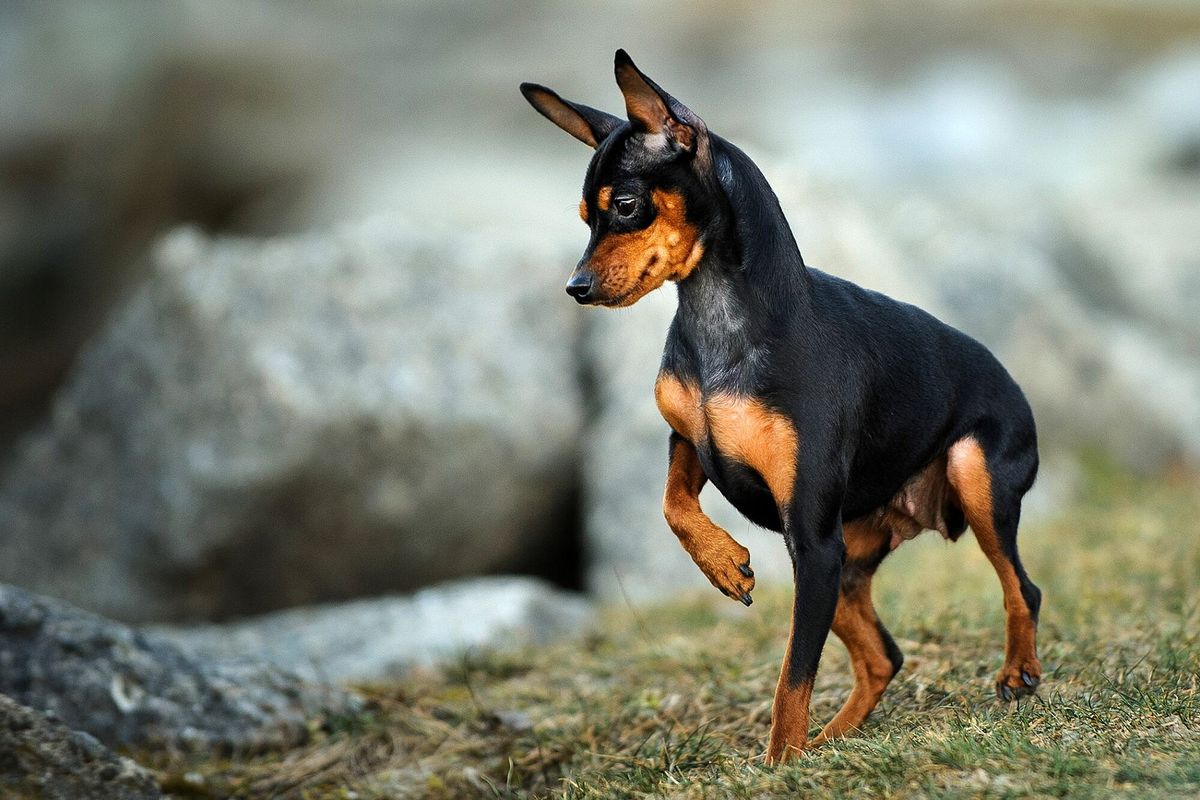
A small, elegant dog, lively, long-legged, with a fine bone structure and dry musculature. Sexual dimorphism is weakly expressed.
Important Dimensions
- Format: Square
- Height at the Elbow: Slightly more than half the height at the withers
- Chest: Deep enough
Temperament and Behavior
An active, very cheerful dog, neither timid nor aggressive. The behavior of males and females differs noticeably.
Head
Skull Part
- Skull: High, but not wide (the width at the level of the zygomatic arches does not exceed the height of the skull)
- Forehead: Arched
- Occipital Protuberance: Weakly expressed
- Brow Ridges: Weakly expressed
- Transition from Forehead to Muzzle (Stop): Clearly defined
Muzzle Part
- Nose: Small, black or matching the coat color
- Muzzle: Dry, pointed, slightly shorter in length than the skull
- Lips: Thin, dry, closely fitting, dark or matching the coat color
- Jaws/Teeth: Small, white, scissor bite
- Cheeks: Flat
Eyes
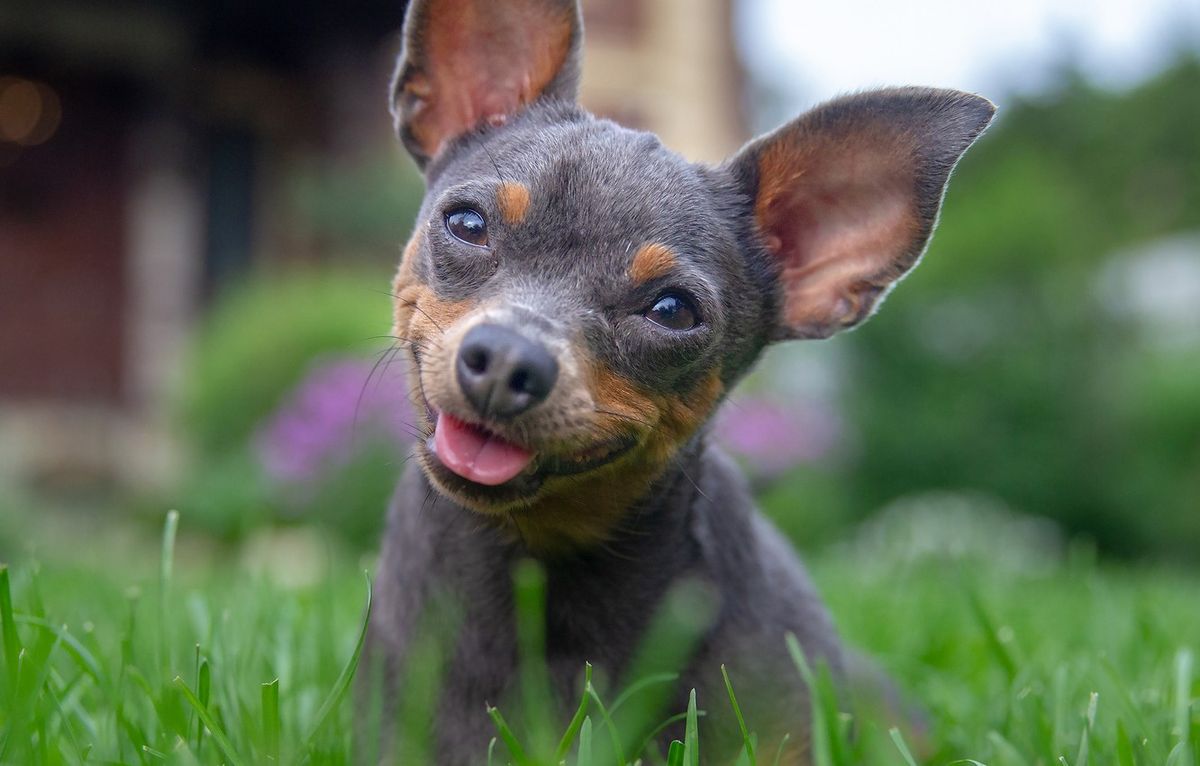
Quite large, round, dark, slightly protruding, set wide and straight. Eyelids are dark or matching the coat color, closely fitting.
Ears
Large, thin, set high, erect.
Neck
Long, dry, held high, slightly curved.
Body
- Topline: Smoothly descends from the withers to the base of the tail
- Withers: Slightly expressed
- Back: Strong, straight
- Loin: Short, slightly arched
- Croup: Slightly rounded, slightly sloping
- Chest: Oval in cross-section, deep enough, not very wide
- Underline: Abdomen tucked up, groin drawn in, forming a smooth and beautifully curved line from the chest to the groin
Tail
- Docked: Short docked, set high
- Undocked: Sickle-shaped, not lower than the level of the back. Held higher in motion
Limbs
Front Limbs
- General Appearance: Dry and straight when viewed from the front
- Shoulders: Moderately long, not too sloping
- Upper Arms: Approximately equal in length to the shoulders
- Elbows: Directed strictly backward
- Forearms: Long, straight
- Wrists: Dry
- Pasterns: Almost vertical
- Feet: Small, oval, arched, compact, directed forward
Hind Limbs
- General Appearance: Straight and parallel when viewed from behind, set slightly wider than the front
- Thighs: With dry and well-developed musculature
- Shins: Equal in length to the thighs
- Hock Joints: With sufficient angles
- Metatarsals: Set vertically
- Feet: Small, oval, arched, directed forward
Movement
Light, free, fast, straight. The topline remains unchanged in motion.
Coat
There are two varieties:
Smooth-haired
Short, close-lying, shiny coat, without undercoat and bald spots.
Long-haired
The body is covered with moderately long (3–5 cm), straight or slightly wavy close-lying hair, not hiding the natural contours of the body. The hair on the head and the front of the limbs is short and closely fitting.
On the back of the limbs — clearly defined fringes. On the feet — long, silky hair, completely covering the claws. The ears are covered with thick, long hair forming a fringe. For dogs over 3 years old, the fringe should completely cover the outer edges and tips of the ears.
Color
Permissible colors:
- Black and tan
- Brown and tan
- Blue and tan
- Lilac and tan
- Red with black
- Red with blue
- Red with brown
- Red with lilac
- Red
- Fawn
- Cream
The nose leather corresponds to the main coat color.
Size
| Parameter | Value |
|---|---|
| Height at the Withers | 22–27 cm (males and females) |
| Weight | Up to 3 kg (males and females) |
| Preferred Height | 25 cm |
| Preferred Weight | 2.3 kg |
Defects
Any deviation from the above points is considered a defect, the severity of which is assessed in proportion to its expression and impact on the health and well-being of the dog.
Defects include:
- Timid behavior
- Height less than 22 cm or more than 27 cm
- Elongated format
- Excessively arched loin
- Sharply sloping croup
- Level bite
- Partial depigmentation of the nose leather, lips, and eyelids
- Low-set ears
- Excessively short or long coat on the body in the long-haired variety
- Small white spots on the chest and toes
- Solid black, brown, or blue colors
Disqualifying Faults
- Aggressiveness or excessive timidity
- Any deviations in behavior or physical condition
- Overshot, pronounced undershot
- Absence of more than 2 incisors in either jaw
- Drooping or semi-erect ears in dogs over 6 months
- Very short coat in the long-haired variety
- Bald spots in the smooth-haired variety
- Large white spots
- Non-standard color
- Height over 30 cm
- Height under 18 cm
- Weight under 1 kg
Source: FCI-Standard N° 352 — Fédération Cynologique Internationale
Found a mistake or outdated advice? Write to us and we will fix it.