Ingrown Nail in Dogs: Problem Solving
What causes 'wolf claws' and how to tell if your dog has a problem. Tips to avoid ingrown nails: trimming and regular walks.
Contents
Ingrown Nail in Dogs: Solution to the Problem
It is not uncommon for pet dogs to experience nail problems. If you notice that your furry friend has started limping while walking, it does not necessarily indicate a bruise or a broken bone. The cause may be:
- a crack;
- panaritium;
- or a dewclaw.
Typically, when a pet begins to limp, it is related to an ingrown nail, which initially causes discomfort and, after some time, sharp painful sensations.
Ingrown Nail: Main Causes of the Condition
An ingrown nail in a dog most often occurs due to a sedentary lifestyle. A pet does not walk on hard surfaces like gravel, dry ground, or asphalt, while carpets and parquet do not provide the necessary impact on the nails.
Owners of indoor pets need to regularly inspect their furry friends' paws, as their nails tend to ingrow significantly more often than those of outdoor dogs. The problem mainly arises with the fifth toe, whose claw grows long and curves. Owners should understand that dogs, regardless of breed, need to walk and play outside frequently.
What is the Danger of an Ingrown Nail in Dogs
When a nail grows long and curves, it digs into the pad of the toe, causing a wound. Due to the painful sensations, the dog cannot step normally on its paw, which is why it limps. The wound quickly enlarges and becomes infected. Inflammation can spread from one toe to the others, so the inspection should be conducted very carefully.
Ingrown Nail in Dogs: What to Do?
The procedure for removing an ingrown nail is carried out in a specific sequence. Initially, the dog's owner should carefully and attentively inspect the damaged area after disinfecting their hands. If the nail has not grown too long and has only slightly injured the pad of the toe, the removal procedure can be performed at home.
To do this:

- The damaged area should be treated with chlorhexidine or disinfected by any other available means.
- The tip of the nail should be carefully clipped with pliers. It needs to be cut in such a way as not to touch the pulp.
- It is important to remember that inside the nail of the animal is living tissue with blood vessels, and if touched, it may start bleeding. If blood appears, the wound should first be treated with chlorhexidine and then with iodine.
The remaining nail is carefully removed, after which an antiseptic is applied to the damaged area again. Even a small piece of broken nail left inside can lead to suppuration. In such cases, it is necessary to urgently consult a veterinary clinic.
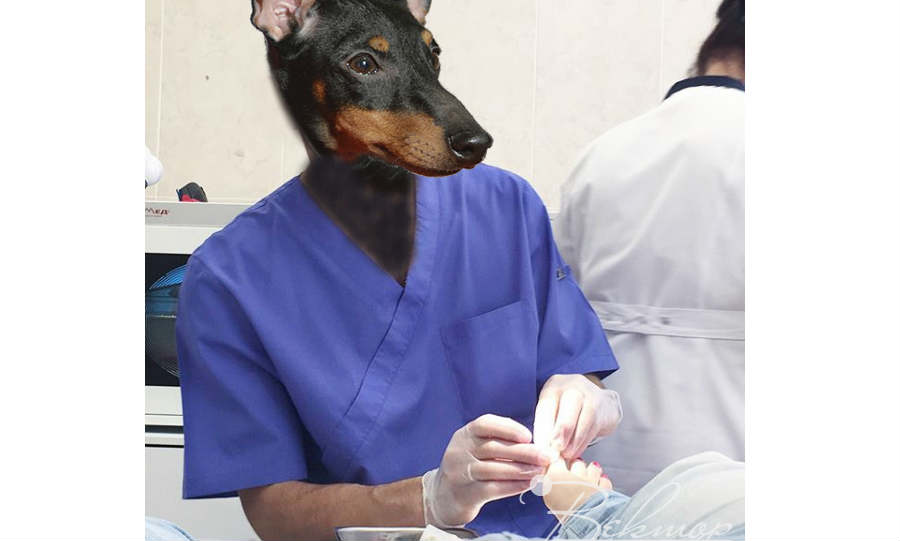
If during the inspection it is found that the nail has grown in very deeply, it is better to consult a veterinarian immediately. The doctor will carefully trim the ingrown part without touching the pulp. After the veterinarian's procedure, it is necessary to treat the wound at home with chlorhexidine and apply healing ointments. Such procedures should be carried out until the wound is completely healed.
Frequently Asked Questions
How can I tell if my dog has an ingrown nail?
If your dog has started limping and shows discomfort while walking, this may be a sign of an ingrown nail.
Why do indoor dogs have more nail problems?
Indoor dogs lead a sedentary lifestyle and do not have the opportunity to wear down their nails on hard surfaces, which leads to ingrowth.
What should I do if I notice an ingrown nail on my dog?
You should carefully inspect the paw, treat the damaged area with an antiseptic, and if the nail has not grown too long, gently remove it using pliers.
What is the danger of an ingrown nail?
An ingrown nail can dig into the pad of the toe, causing pain and inflammation, which can lead to infection.
When is it best to consult a veterinarian regarding nail problems?
If the nail has grown too long or there are signs of infection, such as pus or severe inflammation, you should immediately consult a veterinarian.
Found a mistake or outdated advice? Write to us and we will fix it.