Agility for Dogs: What Is It?
Agility is a real sport for our four-legged friends! Full training and competitions with real prizes!
Agility for Dogs: What Is It?
Sports are accessible to everyone. Even dogs. The special canine sport for our smaller brothers is called agility. This young sport for dogs and their owners, which emerged in the 1970s, is rapidly gaining popularity among dog enthusiasts. The fast-paced sport of agility, filled with running and jumping, is undoubtedly a stunning spectacle. Championships in agility are held all over the world.

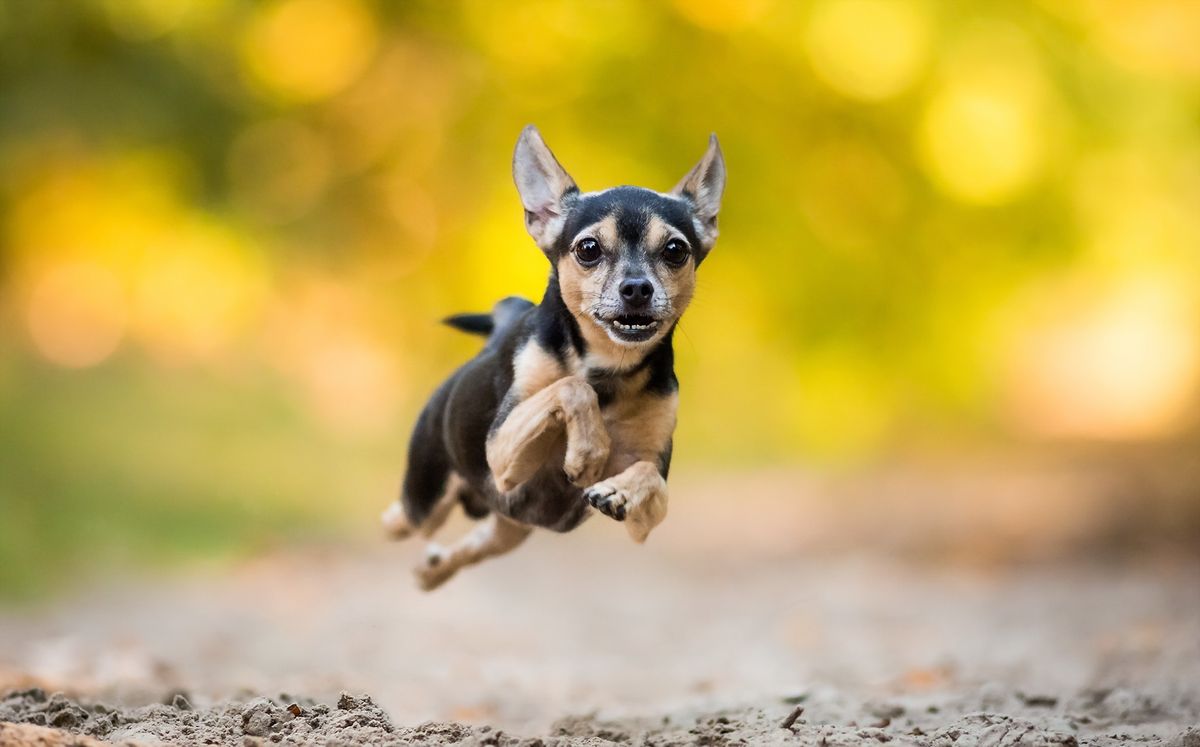
Sport training for dogs and their owners began as demonstration performances. Now, world-class agility competitions are held. They include three categories based on the dog's height: mini, medium, and large. In any category, the main task is to navigate the obstacle course. A specific height for obstacles is set for each category. For instance, mini agility for miniature dogs up to 35 cm tall features lower equipment and a shorter course.
Since 2012, the FCI Agility Rules have been in effect. To date, they are written quite schematically. Therefore, the FCI has developed a guide for agility judges, which is continuously updated.
The rules of agility are simple. The dog must navigate the course with various obstacles with maximum precision. The owner's (handler's) assistance must be minimal. Currently, the rules prohibit the owner from influencing the pet through touching, petting, rewarding with toys or treats, or using training tools. Rough or cruel treatment of the animal, particularly physical punishment for mistakes and disobedience, is not allowed.
To guide the dog through all the sports equipment in the required direction, the owner directs the pet  using voice commands and gestures. The dog must independently overcome the obstacles set just before navigating the course. Familiarization with the course occurs a few minutes before the competition begins.
The animal needs to overcome about twenty obstacles. These include barriers, viaducts or walls, slaloms, seesaws, tunnels, ramps, wheels, long jumps, stop zones, and others. Points are deducted for knocked-over obstacles. The animal that completes the course in the shortest time with the fewest penalty points becomes the agility winner. Thus, agility represents a high level of dog training.
Agility can be viewed in different ways: as a recreational training, a serious sport, a competition, or a game. In any case, active physical exertion brings incredible joy to our cheerful smaller brothers and their owners.
Agility Equipment
Successful participation in agility is achieved through training. One of the main tasks the owner must set for their dog is the ability to recognize the equipment that can be found on the agility course.
- Single agility barrier. The height of the barrier for large dogs is 65 cm, for medium dogs – 45 cm, and for mini agility – 35 cm. The barrier is made of wood and is treated to ensure the animal does not get hurt. This equipment can be stationary or portable. The bar can be narrow like a stick or solid, resembling a grid, rods, etc. The main condition for the barrier is that the top bar or board must fall easily if touched by the dog.
- Double barrier. Two single bar barriers are placed one after the other.
- Viaduct or wall. An obstacle 65/45/35 cm high with one or two openings. Items that easily fall when shaken are placed on top of the obstacle. Thus, if the dog touches the viaduct while passing, these items will visually indicate the animal's mistake.
- Agility table. An obstacle 60/35/35 cm high. A mandatory requirement for this equipment is a rough surface.
- See-saw. Dogs work on a see-saw 1.2 to 1.35 m high by crossing two inclined and one horizontal plank.
- Ramp. A structure shaped like the letter "A" with cross rails on each slope.

- Agility slalom consists of poles. 8, 10, or 12 poles are placed 60 cm apart.
- Agility tunnel can be rigid or soft. The rigid tunnel is set up to create one or two bends. In the soft tunnel, only the entrance is rigid.
- Agility area (zone, square) is fenced with tape. In this section of the course, the dog must stop for a certain time.
- Hurdle. The dog must jump over a suspended hurdle at a height of 80/55/55 cm.
- Long jump. The dimensions and components of the equipment vary depending on the category. For large dogs, the sports equipment consists of 4-5 elements with a total length of up to 1.5 m. For medium breeds – 3-4 elements with a total length of up to 0.9 m. For the smallest athletes, the "Long Jump" equipment includes two components, each 0.5 m long.
To prepare the dog for competitions, it needs to be trained. You can use equipment at dog parks or specialized agility arenas available in your city.
DIY Agility Equipment
You can start training your pet for competitions using homemade equipment. Materials for making agility equipment can include old tires and tree branches that need to be processed.
The equipment must be made according to FCI requirements. The size and description of each obstacle can be found on the federation's website.
Of course, it won't be possible to make all the equipment yourself. You will need to buy a table with a timer and tunnels.
For home training, you can get by with a few barriers, a tunnel, slalom, and a hurdle. It is quite feasible to make a see-saw yourself. It is best to start training your pet with these pieces of equipment.

How to Conduct Agility Training
You can start teaching agility to your pet once they reach three months of age. The beginning of their sports career should be accompanied by rewards and treats for each correctly executed command. Daily training should take place in a special location that meets safety requirements for your four-legged friend.
Agility training requires patience and mutual understanding with your pet. Training grounds in many cities are ready to provide you with the opportunity not only to use equipment for competition preparation but also to offer agility trainers. However, as practice shows, a full connection and understanding between a stranger and your dog may not develop. This, in turn, leads to low performance in competitions. The ideal trainer for your pet is you yourself.
Training to navigate obstacles includes a whole range of general activities. You need to walk extensively with the dog, walk on a tight leash, run cross-country and pull, run in deep snow and water, play, encourage jumping up and long jumps, and swimming. General physical preparation is aimed at developing the dog's endurance.
Agility training should be conducted without coercion. High barriers are taboo for beginners and small dogs. The bar is raised gradually when the animal easily jumps over a certain height. The first attempts at the barrier should be done with your support. From about 6 months, the dog can start learning to overcome higher bars and solid barriers. Keep in mind that to clear greater heights and solid barriers, the dog needs enough space to run. So ensure there is room for a run-up.
Tip: Training with puppies under a year should be conducted with caution. Young dogs' skeletons are not fully formed, so there are risks of injury during exercises.
Problems may arise with the dog crawling over low obstacles. Here, it is important to lay the dog on the ground and hold its withers with your left hand, preventing the animal from getting up. In your extended right hand, hold a treat in front of the pet. This will encourage it to crawl forward for the tasty reward.
With the right attitude towards agility training, you will soon see how much your pet enjoys training.
Dog Breeds for Agility
 Agility is a democratic sport. It does not set boundaries for breeds, sizes, and weights of our four-legged friends. Anyone interested can participate in competitions. The main thing is the desire. Naturally, it will be difficult for large breeds to navigate the course, but the goal of agility is overall development and fun. Therefore, if you want to work on the equipment with your heavy dog, set lower barriers for them and choose simpler obstacles.
It is clear that a St. Bernard will lose speed to a Doberman, a Great Dane will struggle to move through a tunnel, and a Toy Terrier is unlikely to conquer a seesaw that may not tilt under its weight. But agility is a sport for enjoyment. And that enjoyment is mutual – for both the dog and the owner. First and foremost, a serious contender for victory will be a light, agile, enthusiastic, and cheerful dog.
Give yourself and your friend the pleasure of mastering the exciting sport of agility.
Frequently Asked Questions
What is agility for dogs?
Agility is a canine sport in which dogs navigate an obstacle course under the owner's guidance. The goal is to complete the course with maximum precision and minimal time.
What obstacles are included in agility?
In agility, dogs navigate various obstacles such as barriers, tunnels, slaloms, and seesaws. A total of about twenty different pieces of equipment must be overcome.
Are there categories of agility for dogs?
Yes, agility is divided into three categories based on the dog's height: mini, medium, and large. Special heights for obstacles are set for each category.
Is special training required to participate in agility?
Yes, the dog must be well-trained and able to follow the owner's commands without physical influence. This requires a high level of training.
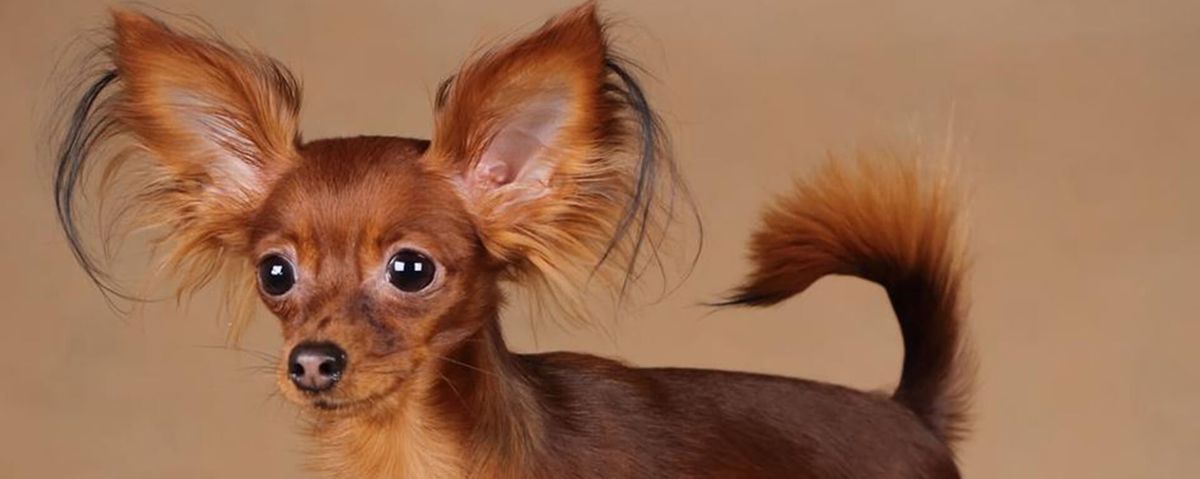
Can small dogs, such as the Russian Toy Terrier, participate in agility?
Yes, the Russian Toy Terrier is well-suited for agility, especially in the mini category, where lower obstacles are used.
Found a mistake or outdated advice? Write to us and we will fix it.