Correct Bite in Dogs: How to Check and Fix It
A proper bite in your dog is crucial for health and aesthetics. Learn about bite types and correction methods in our article.
The basics of dentistry should be mastered by any self-respecting dog owner, especially those with a Russian Toy Terrier. It doesn't matter whether you plan to show your pet at exhibitions and participate in dog shows or not.
The fact is that a proper bite in dogs is necessary not only as an indicator of exterior quality. A correct bite affects the appearance of the animal and the health of the pet. Many problems that arise with the smooth functioning of the gastrointestinal tract, respiratory, and cardiovascular systems are related to dental issues. Not to mention that jaw pathologies can cause injuries to the gums, tongue, and mucous membranes of the dog's mouth.
What types of bites exist and what should a dog's bite be like.
A dog's bite is the way its teeth come together. The correct bite is individual for each breed. What is good for a bulldog is a disqualifying fault for a Toy Terrier. And vice versa.

Cynology distinguishes the following types of dog bites based on the shape of the teeth alignment:
- Scissor bite (normal) or orthodontia. The name comes from the similarity to the structure of scissors.
This form of teeth alignment is characterized by the close contact of the lower incisors with the back side of the upper jaw. Despite the absence of gaps between the teeth, they do not rub against each other but form a sort of "lock."
This form of teeth alignment is justified from the perspective of the dog's physiology and is the norm for most breeds and their wild relatives. Such a jaw structure allows the animal to gnaw bones, bite, and hold its prey firmly in its teeth. As you can understand, this is important for the wild and practically all working dog breeds.
For the Toy Terrier, a normal scissor bite is also the standard.
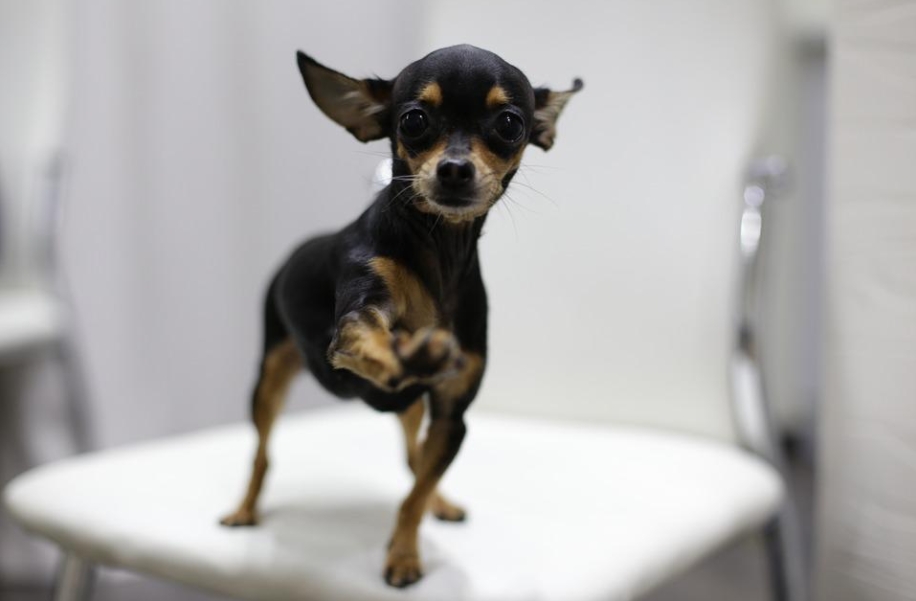
Look at the photo of a proper bite for a Toy Terrier. In case of deviation, the dog is excluded from the breeding stock allowed for reproduction.
- Level bite (clipping bite). When the jaw is closed, the upper and lower incisors meet in a straight line, pressing against each other. Meanwhile, the alignment of the canines and molars can be either complete or incomplete.
This type of teeth alignment, due to the significant load on the front incisors, affects the durability of the chewing elements. They wear down much faster than with a scissor bite. At the same time, the canines and molars are not subjected to wear.
A congenital level bite is associated with the initially incorrect positioning of the upper and lower jaws in relation to each other. An acquired clipping bite forms during the period of tooth replacement in a puppy when the young dog is overly active in games involving grabbing and tugging. As a result, the lower incisors tilt forward at an angle.
A level bite is allowed for Toy Terriers, characterized by the alveolar tilt of the incisors. Such dogs are not disqualified at exhibitions.
- Undercut or bulldog bite (prognathism, protruding chin). This type of bite is familiar to all from the breeds of boxers or bulldogs, where the lower jaw protrudes in front of the upper one. Often, the lower incisors and canines are exposed. This form of teeth alignment is a sort of hallmark of these breeds, as the facial bones in these animals are shortened.
- Overbite (prognathism). A disqualifying pathology characterized by a shortened lower jaw, which prevents the lower incisors from meeting the upper ones.
Causes of incorrect bite in dogs.
In most cases, the cause of an incorrect bite in a dog is genetics. Therefore, breeders pay special attention to preventing animals with such deviations from breeding.
However, there are other reasons for the improper formation of chewing elements in a Toy Terrier.
These include:
- Violation of feeding requirements. This primarily concerns a lack of minerals in the diet of pregnant dogs and puppies.
- Jaw injuries during puppyhood.
- Active games focusing on grabbing and tugging with the teeth. Excessive strain leads to unfortunate consequences.
- Toy Terriers often experience problems when replacing milk premolars with permanent ones. Therefore, timely removal of milk premolars will allow for the proper development of permanent teeth and spare you from issues with incorrect teeth alignment in the future.
Correcting a dog's bite.
Correcting a dog's bite is very difficult; it is easier to pay attention to the animal's oral cavity than to adjust the positioning of the jaw and teeth.
For puppies during the period of transitioning from milk teeth to permanent ones, it is important to focus on the pet's nutrition. The diet should include minerals such as calcium and phosphorus. When feeding a Toy Terrier puppy with ready-made dry food, choose a feed that contains these minerals. If your dog eats natural food, add a vitamin-mineral supplement to their diet, the dosage and composition of which should be agreed upon with a veterinarian.
In cases of dental problems in Toy Terrier puppies, an ideal bite can be formed by using the services of veterinarians specializing in dentistry and orthodontics. They place a special rubber ring on the teeth that straightens the incisors and canines.
For adult Toy Terriers, the form of teeth alignment can be corrected using dog braces. Teeth that need to be slightly shifted or rotated can be adjusted. For this, non-removable wire connections are installed on the teeth. Medical stainless steel or nickel-titanium alloy is used as the material.
The wire connections apply pressure to the tooth, and since the connection of the tooth to the jaw is not rigid, the incisor or canine begins to gradually move in the desired direction. The freed space is filled with bone tissue. Braces are an individual device. For Toy Terriers with allergic reactions, ulcerative stomatitis, gingivitis, and other oral diseases, braces are contraindicated. In all other cases, the veterinarian will install the device to correct the bite and explain how to care for it.
Frequently Asked Questions
Why is a proper bite important for a Russian Toy Terrier?
A proper bite is necessary not only for aesthetics but also for the health of the dog. It affects the functioning of the gastrointestinal tract and can prevent injuries to the gums and other parts of the oral cavity.
How can I check my Toy Terrier's bite?
To check the bite, open the dog's mouth and carefully examine how the upper and lower jaw teeth come together. A scissor bite is considered the norm for this breed.
What should I do if my Toy Terrier has an incorrect bite?
If your dog has an incorrect bite, it is recommended to consult a veterinarian or a dog dental specialist. They can offer treatment or correction options.
Can I show a dog with a level bite?
Yes, a level bite is allowed in Toy Terriers; however, it should be characterized by the alveolar tilt of the incisors. Nevertheless, an incorrect bite may affect the evaluation at exhibitions.
How often should I check my Toy Terrier's teeth?
It is recommended to regularly check your Toy Terrier's teeth, especially during the tooth replacement period and as they age. This will help identify problems at an early stage.
Found a mistake or outdated advice? Write to us and we will fix it.