Teeth of the Russian Toy Terrier - What You Need to Be Prepared For
Teeth of the Russian Toy Terrier - What to Expect - Your Russian Toy Terrier
Contents
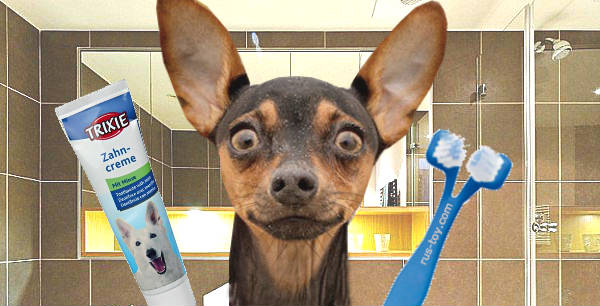
The Condition of Teeth in Russian Toy Terriers — What You Need to Be Prepared For
The condition of a Russian Toy Terrier's teeth is not only a factor that increases the chances of winning at dog shows but also a sign that your dog is healthy.
The breed's miniature size does not mean that Toy Terriers have fewer teeth. They have the same number as a Caucasian Shepherd – 42 teeth, with 22 located in the lower jaw and 20 in the upper jaw. The teeth are of four types – incisors, canines, molars, and premolars, also referred to as primary and secondary teeth.
The teeth of a Toy Terrier should be closely monitored by the owner, especially during the puppy's growth period. To ensure that miniature pets, whether participating in shows or simply beloved family companions, develop a proper bite, the owner must take an active role in oral hygiene and the treatment of chewing organs.
The Change of Teeth in Russian Toy Terriers
A toothless mouth of a Toy Terrier will soon delight with the first milk canines within two weeks. Then comes the time for milk premolars and incisors. They erupt simultaneously in both the upper and lower jaws, with six coming in at a time.
On average, by two months, a Toy Terrier puppy can have 28 milk molars in its mouth. If there are slightly fewer or more, it is not a cause for panic. To reiterate, 28 premolars is the average count. The age at which the change from milk premolars and incisors begins is individual for each dog, so it cannot be definitively stated when a Toy Terrier will lose its baby teeth.
During the period when the puppy is four to six months old, the process of resorption of the root of the milk chewing organ begins, which then falls out on its own, making way for the permanent teeth. The permanent premolar or incisor grows in the same channel where the milk tooth was formed. Thus, if the temporary chewing organ does not fall out in time, the permanent one may not grow at all or may grow unevenly.
The complete loss of all milk teeth should occur by the age of eight months. It is important to remember that the body of a weak, unhealthy puppy cannot cope with the resorption of the root of the temporary chewing organ and the full development of the root of the permanent one, so the change of teeth in a Toy Terrier may be delayed. The pet's health during this period should be protected and supported with proper nutrition and additional vitamins.
A loose milk premolar or incisor should be removed from the dog as soon as possible. The owner can do this themselves by gently wiggling the tooth daily.
It is worth noting that when Toy Terriers are changing teeth, it would be beneficial for the owner to learn the basics of dentistry. And if you are preparing your pet for shows, you will need the services of a veterinary dentist.
Does a Toy Terrier Need Tooth Extraction?
The characteristics of the Toy Terrier breed include a predisposition to anomalies during the change of chewing organs. This applies to all miniature decorative dogs weighing up to four kilograms. At a genetic level, these pets lack the natural (spontaneous) replacement of milk premolars and incisors with permanent ones, and additionally:
- Small breed dogs, including terriers, have narrow jaws, so their chewing muscles are underdeveloped.
- The period of replacing temporary teeth with permanent ones coincides with the active development of the jaw itself.
- The puppy's diet may be low in calcium, or calcium may not be adequately absorbed by the animal.
- Unlike any other breed, the small teeth of a Toy Terrier are prone to improper positioning of the tooth buds, as the milk and permanent tooth buds do not fit in the small jaw.
Owners of tiny dogs need to be prepared for this problem and consider whether a Toy Terrier needs tooth extraction as a necessity. Otherwise:
- A delay or disruption in the process of replacing milk teeth with permanent ones can provoke a condition known as polydentia. This occurs when the number of teeth in a Toy Terrier exceeds the natural count due to the simultaneous presence of temporary and permanent premolars and incisors.
- Milk teeth that fall out late or are not extracted can lead to the development of dystopia – improper positioning of the permanent and false teeth.
- Misaligned canines pose a particular danger to the miniature dog, as they can become sources of injury to the hard palate, lips, jowls, and tongue. This can lead to the formation of ulcers in the pet's mouth, which bleed and cause pain.
Advice: If you notice that a permanent incisor, premolar, or molar has grown halfway through the milk tooth, the temporary chewing organ should clearly be extracted.
If the milk premolars and incisors are not extracted and remain in place, they will hinder the growth of the permanent teeth, leading to a guaranteed improper bite, with further development of tartar or cavities. Naturally, this would be detrimental to show prospects.
A veterinary dentist removes the temporary chewing organs from a Toy Terrier under general anesthesia or using local anesthesia:
- Local anesthesia does not harm the pet's health as much compared to general anesthesia, but the dog may still feel pain during the procedure.
- General anesthesia is a more humane method, but the small terrier often takes a long time to recover from it.
Teeth Falling Out in Russian Toy Terriers
The problem of loose and falling permanent teeth is common in small breeds. This usually occurs between the ages of one and two. The dog should be taken to a veterinary dentist immediately to determine the cause of the bone tissue destruction. The main causes include:
- Dental plaque, which starts off soft but hardens into tartar, destroying the chewing organ.
- Gingivitis – an oral disease characterized by inflamed gums. Advanced gingivitis leads to gum atrophy, the formation of periodontal pockets, and consequently, loose teeth.
- Periodontitis – prolonged inflammation of the gums is accompanied by bleeding, pus discharge, pain for the pet when chewing food, and a foul smell from the mouth. The pet may eat poorly, lose weight, and become aggressive. Facial asymmetry may also manifest.
As soon as you notice that a Toy Terrier is losing teeth, hurry to the vet. Only timely assistance and meticulous adherence to the dentist's recommendations will stop further loss and loosening of the chewing organs.
The owner's task is to prevent loosening and loss of teeth, which involves:
- Regularly brushing each tooth with special pastes and brushes designed for dogs.
- Providing a proper diet that must include hard foods (apple, carrot, beet in raw form, crackers, and special crunchies).
Frequently Asked Questions
When do Russian Toy Terrier puppies start to change their teeth?
The change of teeth in puppies begins at the age of four to six months when the milk teeth start to resorb.
How many teeth does a Russian Toy Terrier have?
A Russian Toy Terrier, like other dogs, has 42 teeth: 22 in the lower jaw and 20 in the upper jaw.
Do Toy Terriers need tooth extraction?
Yes, if a milk tooth is loose, it should be removed to avoid problems with the growth of the permanent tooth.
How to care for a Toy Terrier's teeth?
It is important to monitor oral hygiene and consult a veterinary dentist in a timely manner, especially if the dog is being prepared for shows.
How many milk chewing teeth should a two-month-old Toy Terrier puppy have?
On average, a two-month-old puppy should have about 28 milk chewing teeth.
Found a mistake or outdated advice? Write to us and we will fix it.