Vaccinations for Russian Toy Terrier
Learn about the benefits of vaccinations for your pets, the types available for Russian Toy Terriers, and how the procedure is done.
Contents
Vaccination questions for dogs provoke a lot of debates among dog owners. Some owners fundamentally do not vaccinate their pets, while others strictly adhere to all vaccination schedules. We will not convince you of the necessity of vaccinations for our four-legged friends. We will explain what vaccination provides for our pets, what vaccinations exist for the Russian Toy Terrier, when to administer them, and how the procedure is carried out.
The essence of vaccination lies in introducing an antigenic preparation into the animal's body, which promotes the development of immunity to these diseases. Some living beings develop immunity quickly, while others do so more slowly. However, this peculiar training of the body is intended to protect the dog's organism from diseases in the future.
Russian Toy Terrier. What vaccinations are needed?
Veterinarians divide vaccinations into mandatory and additional.
Mandatory vaccinations for the Russian Toy Terrier.
Mandatory vaccinations are those against dangerous diseases that can lead to death.
- rabies. This disease is dangerous for both dogs and humans. The main danger lies in the fact that at present, as soon as clinical symptoms appear, there are no effective treatment methods. So think about whether the Russian Toy Terrier needs a rabies vaccination or not.
- bordetellosis. This infection, upon entering the dog's body, causes inflammation of the respiratory system (lungs, trachea, and bronchi).
- plague. One of the common and highly contagious diseases. The highest mortality rate among young dogs is due to plague.
- viral hepatitis. Young animals are at risk. Therapy is conducted through the administration of allergenic serum.
- adenoviral infection. If the infection is not detected in time or if it is in an advanced stage, it leads to the development of acute forms of the disease.
- parvoviral enteritis. The parvovirus pathogen is characterized by high resistance to any influence, even physical and chemical. The virus is dangerous because it can remain active in the environment for several months.
- leptospirosis (infectious jaundice). Leptospira microbes affect the dog's circulatory system and internal organs. It poses a danger to humans as well.
Additional vaccination (optional vaccinations).
Additional vaccinations are not necessary for all Russian Toy Terriers. A veterinarian develops an individual vaccination plan for your dog based on the immunity developed and the overall condition of the animal.
Optional vaccines include those against the following diseases:
- piroplasmosis. This disease is caused by a bite from a forest tick. This ailment is common in European countries.
- tick-borne borreliosis (Lyme disease), which is also caused by a tick.
- fungal diseases.
- canine parainfluenza is dangerous for Russian Toy Terrier puppies, as it is transmitted through the air.
- coronavirus enteritis. A pet can catch this disease by sniffing the feces of an infected relative or through direct contact with a sick dog.
The cost of health, if we consider vaccinations for the Russian Toy Terrier, is influenced by factors such as the vaccine manufacturer and the location of the vaccination. The price of a vaccination ranges from 150 to 400 hryvnias. If the price is higher, it may include the entry of vaccination data into the veterinary passport of the Russian Toy Terrier.
When should the Russian Toy Terrier receive its first vaccination?
Caring for the health of a decorative puppy begins literally from the first minutes of its birth. Vaccination of Russian Toy Terrier puppies begins at the age of 3-5 weeks, depending on the indicators of the organism's vitality and the type of vaccination.
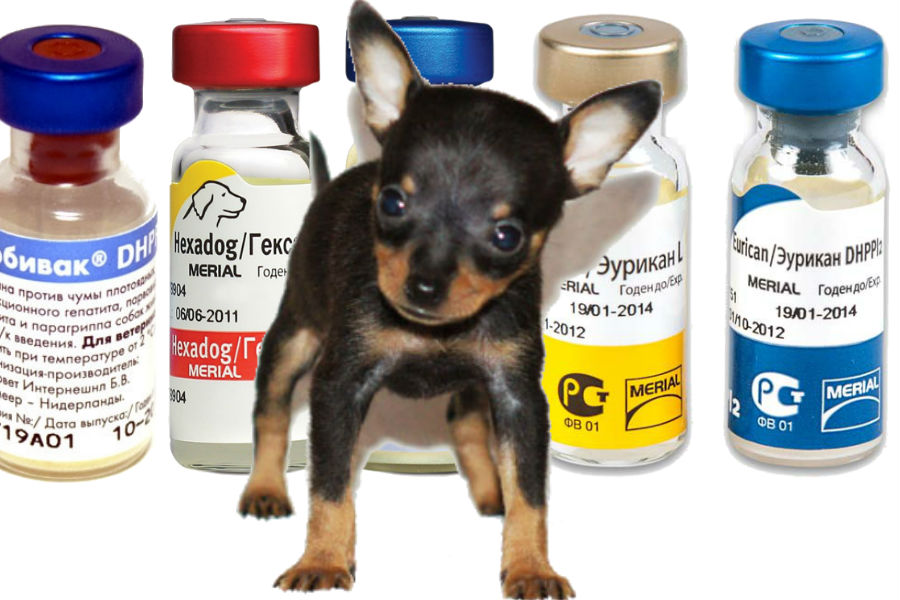
The fact is that there is currently an excellent selection of vaccines for dogs, consisting of monovaccines aimed at developing immunity against one disease, and combined vaccines made up of antigens from several diseases.
The greatest convenience is observed in using a combined vaccine for Russian Toy Terrier puppies. One preparation includes the most common infectious antigens. The combined vaccine prompts the body to develop immunity against rabies, parvoviral enteritis, canine plague, rhinotracheitis, leptospirosis, and adenoviral hepatitis.
It is your right to choose between live or killed vaccines. The former consists of pathogens grown in laboratory conditions, while the latter is filled with completely neutralized dead microorganisms. It is worth noting the following difference between these types of vaccines. Strains of live antigens introduced to the Russian Toy Terrier provoke diseases in the dog, but in a very mild form, while dead pathogens do not lead to any deviations in the post-vaccination period. However, more robust immunity is provided by live strains.
The quantitative content of pathogens in the combined vaccine also plays a role. The higher the number of antigens in the vaccine, the stronger the manifestation of disease symptoms in the animal, but at the same time, the higher the formation of strong immunity in the dog.
The first vaccination for a Russian Toy Terrier puppy does not protect against diseases, as it is administered against infectious diseases known as "kennel cough" — bordetellosis and canine parainfluenza. The vaccine is administered when the puppy is 4-6 weeks old.
After that, a quarantine period of two weeks is mandatory, after which the second vaccination of the decorative dog is conducted. Note that you should only buy a puppy after the second vaccination and the subsequent quarantine. If the breeder offers you a puppy with only one vaccination, then, no matter how much you want to cuddle that little bundle of joy, refrain from that thought — wait. After all, in the event of any illness, you may not be able to cope with the disease or respond in time to the emerging symptoms. Remember — the first two vaccinations are done by the breeder.
When should the Russian Toy Terrier receive vaccinations?
To avoid doubts and worries about when to vaccinate the Russian Toy Terrier, we offer you a classic vaccination schedule for the Russian Toy Terrier.
There are several rules associated with vaccinations for miniature terriers, including Russian Toy Terriers, that you, as an owner, must follow:
- Before introducing antigens into the dog's body, prepare the animal. Conduct a cleansing of the pet's body from helminths, which reduce the protective function of the Russian Toy Terrier's body. Get rid of fleas and ticks if they are present. A couple of days before the vaccination procedure, monitor the toy terrier's body temperature. The norm is a temperature from 37.5 to 39 degrees.
- If the dog is unwell, inform the veterinarian so that he can postpone the procedure.
- For the first two hours after vaccination, observe your pet to ensure that it does not have an allergic reaction to the vaccine.
- During the quarantine period (two weeks after vaccination), reduce or completely eliminate contact with other dogs. Follow all pet care rules, especially regarding hygiene. Do not allow overheating or overcooling of the animal, do not bathe it, do not change its diet, and do not give it heavy physical loads.
- Any changes in behavior during this period should prompt you to seek veterinary assistance as soon as possible.
After fourteen days, the immunity of the Russian Toy Terrier will be formed, and you can rest assured about your friend.
Frequently Asked Questions
What mandatory vaccinations does my Russian Toy Terrier need?
Mandatory vaccinations for the Russian Toy Terrier include vaccines against rabies, bordetellosis, plague, viral hepatitis, adenoviral infection, parvoviral enteritis, and leptospirosis.
What are additional vaccinations, and does my pet need them?
Additional vaccinations are not mandatory and are prescribed individually by a veterinarian based on the dog's health status and developed immunity.
How often should the Russian Toy Terrier be vaccinated?
The vaccination schedule depends on the age and health status of the dog, but usually vaccinations are given during puppyhood and repeated later according to the veterinarian's recommendations.
How does the vaccination procedure for the Russian Toy Terrier go?
The vaccination procedure is usually conducted at a veterinary clinic and includes the administration of the vaccine under the skin or into the muscle, as well as a preliminary examination of the animal.
Why is it important to vaccinate my Russian Toy Terrier?
Vaccinations help develop immunity to dangerous diseases, protecting the dog from serious illnesses and improving its overall health level.
Found a mistake or outdated advice? Write to us and we will fix it.