First Vaccinations for Puppies: Types and Vaccine Manufacturers
What vaccinations does your puppy need and when? How to choose the right vaccine manufacturer? Learn more.
Contents
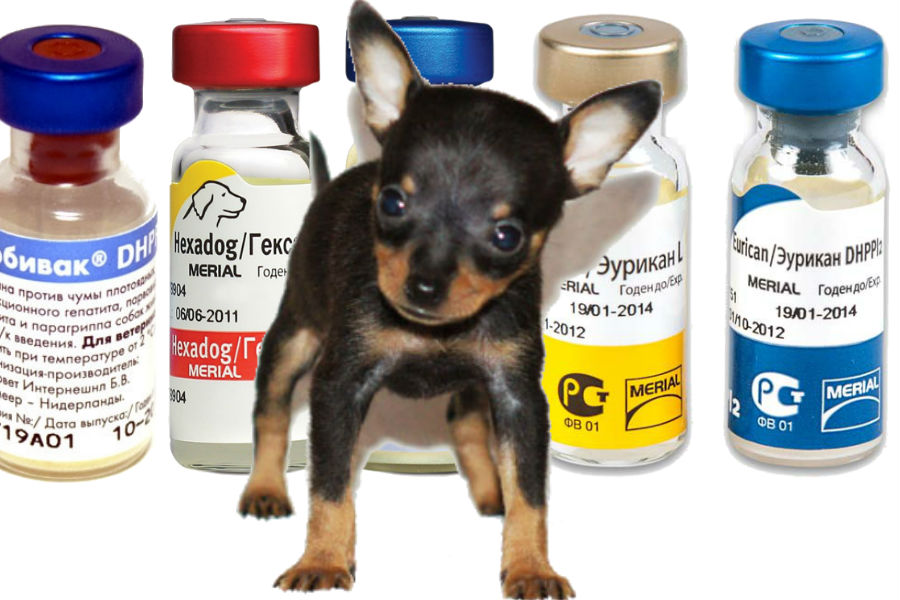
Title: First Vaccinations for Puppies. Types, Manufacturers of Vaccines.
Few pet owners can boast of having innate immunity to all diseases in their pets. Of course, four-legged friends never suffer from scarlet fever. But this is a species trait, a natural insensitivity to this disease.
Since one can only dream of innate immunity to all canine diseases, the animal must develop acquired immunity.
If your pet has suffered from any infectious disease, a specific restructuring occurs in the dog's body, resulting in immunity to that disease. However, to prevent the onset of illness in your pet and to wait for acquired immunity to develop, vaccinations for dogs are carried out.
The formation of acquired immunity in dogs begins at an early age. Timely immunization of puppies means confidence that the risks of contracting dangerous diseases are reduced to zero.
In the first months of life, a puppy is reliably protected from dangerous diseases thanks to antibodies that enter its small body along with the mother’s milk. However, upon reaching two months of age, maternal immunity ceases to protect the puppy, and it requires the owner's assistance in the form of vaccination.
For puppies living in nurseries, the first vaccination is given even earlier, at six weeks of age. This is due to the fact that a large number of dogs of different ages live in the nursery, increasing the risk of disease transmission.
The vaccination schedule for puppies is strictly individual but does not depend on the breed of the dog. It is advisable to consult a veterinarian who can help create a vaccination schedule specifically for your pet.
What Vaccinations Are Given to Puppies
There are two types of vaccinations for dogs:
- Monovalent vaccine, which develops immunity against one disease.
- Polyvalent vaccine, which acts against several diseases at once.
Using a polyvalent vaccine allows you to avoid multiple vaccinations. Moreover, during the first year of life, a puppy needs to receive about 5 vaccinations against dangerous diseases.
Tip: Be very attentive to your veterinarian's recommendations when planning to give a polyvalent vaccination to small breed dogs, such as the Russian Toy Terrier. The fragile growing body of decorative dogs may not cope with producing antibodies against a large number of viruses introduced into the dog's body with the polyvalent vaccine. Therefore, the polyvalent vaccination for small breeds is administered only based on the veterinarian's conclusion.
Preparation for the puppy's first vaccination is essential. This should begin at one and a half months of age, two weeks before vaccination. Monitor the condition of your little friend, as vaccinating a sick puppy is not recommended.
The first vaccination (puppy or juvenile) recommended by veterinarians should be against enteritis and hepatitis, the most common diseases. If the puppy is completely healthy according to the indicators, two vaccinations against these diseases are given at once.
A month after the first vaccination, vaccination against a range of diseases is conducted:
- Canine distemper;
- Parvovirus infection;
- Parainfluenza;
- Leptospirosis;
- Rabies.
For convenience, we offer immunization options depending on the risk of infection in the form of a table:
maximum
Bordetellosis
Bordetellosis
Parvovirus infection
Parvovirus infection
Hepatitis
Parainfluenza
Parvovirus infection
Leptospirosis
Hepatitis
Parainfluenza
Parvovirus infection
Leptospirosis
Hepatitis
Parainfluenza
Parvovirus infection
Leptospirosis
Hepatitis
Parainfluenza
Parvovirus infection
Leptospirosis
Rabies
Hepatitis
Parainfluenza
Parvovirus infection
Leptospirosis
Rabies
Hepatitis
Parainfluenza
Parvovirus infection
Leptospirosis
Rabies
Note that at 11-13 weeks, a booster vaccination is conducted after a certain interval following the previous vaccination, which involves the same combination of vaccines and adds one against rabies. This approach is common in veterinary practice.
Rabies vaccinations are conducted only by institutions authorized for this type of activity; otherwise, you may encounter problems with the paperwork for your dog.
It should also be noted that for puppies living in regions unfavorable for diseases such as canine distemper and parvoviral enteritis, vaccinations against these infections are administered starting from one month of age.
So, as you can see, there cannot be a single vaccination schedule for your puppy. Many factors must be considered when creating a vaccination scheme. Therefore, we repeat: in this matter, it is best to trust your veterinarian.
Vaccinations for Dogs. Names and Manufacturers of Vaccines.
The best vaccines that form a lasting immunity in both adult dogs and small puppies, and are successfully used by professional breeders and kennel owners, are considered:
- Nobivac;
- Eurican;
- Rabizin;
- Hexadog;
- Multikan-8.
Let’s take a closer look at each of these vaccines.
Nobivac Vaccine.
The Dutch Nobivac vaccine is recognized by international veterinarians and specialists, as it develops a lasting immunity in the dog within two weeks, which also lasts for a year.
Nobivac vaccines are presented in a series that includes:
- Nobivac Puppy DP. A preparation used for immunizing puppies starting from one month of age. The vaccine's action is aimed at developing immunity against distemper and parvoviral enteritis.
- Nobivac DHPPi. This vaccine is used when puppies reach ten weeks of age. It is combined with vaccinations against leptospirosis and rabies.
- Nobivac R. This rabies vaccine can be administered from three months of age.
- Nobivac L. Vaccine against leptospirosis.
- Nobivac KC. Two weeks after the puppy's birth, an intranasal vaccine against parainfluenza and bordetellosis can be administered.
Eurican Vaccine.
Eurican is a product from a French manufacturer, consisting of two series that differ by the presence of a component against rabies.
- Eurican DHPPi+2L. Intended for immunizing two-month-old puppies. The composition includes vaccines against distemper, enteritis, hepatitis, leptospirosis, and parainfluenza. If this vaccine is used, a revaccination with the rabies vaccine must be conducted.
- Eurican DHPPi+2LR. This preparation includes a vaccine against rabies.
The manufacturer of Eurican also produces the monovalent vaccine Rabizin, which is aimed at immunizing the dog’s body against the rabies virus.
Hexadog Vaccine.
Another French vaccine, Hexadog, is aimed at developing immunity to adenoviral infection, distemper, parvovirus, leptospirosis, and rabies.
Multikan-8 Vaccine.
Multikan-8 (of Russian production) is administered to dogs against distemper, adenovirus, parvovirus, coronavirus, leptospirosis, and rabies.
The likelihood of contracting a dangerous virus in vaccinated dogs is virtually reduced to zero thanks to these vaccines.
So, do not neglect vaccinations.
Frequently Asked Questions
When does a Russian Toy Terrier puppy need its first vaccination?
The first vaccination is recommended for puppies at six weeks of age, especially if they live in nurseries. Otherwise, puppies usually receive their vaccination at two months of age.
What vaccinations are necessary for puppies?
It is recommended to vaccinate against enteritis and hepatitis, as these are the most common diseases. If the puppy is healthy, both vaccinations can be given at once.
What vaccination schedule is suitable for my puppy?
The vaccination schedule is individual, and it is best created by a veterinarian, taking into account your pet's health and breed characteristics.
What is a polyvalent vaccine, and is it necessary?
A polyvalent vaccine protects against several diseases at once, which reduces the number of vaccinations. However, for small breeds, such as the Russian Toy Terrier, its use should be based on the veterinarian's conclusion.
How to prepare a puppy for the first vaccination?
Preparation for the first vaccination begins at one and a half months of age, two weeks before vaccination. It is important to monitor the puppy's condition and not to vaccinate a sick pet.
Found a mistake or outdated advice? Write to us and we will fix it.