How to Help Your Dog in the Heat. How Dogs Cope with It.
The hottest time of the year is here. How do different breeds cope with the heat? Tips on feeding and helping your dog.
Contents
The summer heat exhausts not only people but also dogs. While humans know how to cool their bodies and protect themselves from overheating and sunstroke, the situation is different for our four-legged friends.
Our smaller brothers need human assistance during the summer heat.
Body Temperature of Dogs.
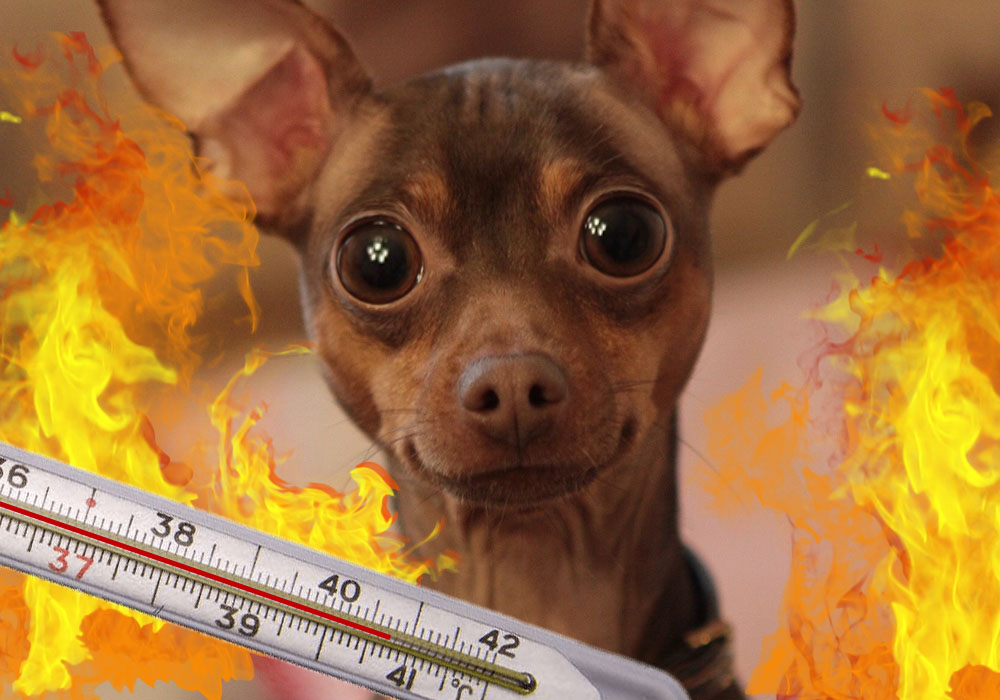
One of the most important indicators of a dog's health is its body temperature. Hot weather is one of the factors that can lead to changes in an animal's temperature. An increase of 0.5-1 °C is considered normal for dogs in the heat. If the increase is temporary, there is no need for concern. You just need to reduce the impact of the environment on your pet (we will discuss this below). However, a significant and prolonged deviation requires you to immediately take your dog to the veterinarian.
There is no single temperature indicator for all dogs. The temperature of our four-legged friends depends on breed, age, physical condition, weight, and more. For example, for representatives of decorative breeds, a temperature that would send larger animals to the vet is considered normal. For convenience, here is a table of average body temperature indicators depending on the age and size of the dog.
Average Body Temperature Indicators of Dogs Depending on Age and Size.
Dog Breeds
Temperature, °C
But do not forget about the individual characteristics of pets, which may be related, for example, to physical exertion, stressful situations, giving birth, or being in heat.
How Dogs Behave in the Heat.
Hot, stuffy weather relaxes. A dog, like other living organisms, may feel lethargic, sleep a lot, and may refuse to eat. In the heat, dogs urinate less. Don't be alarmed if your pet doesn't wag its tail joyfully when you meet it and tries to find a cool place. The dog may even refuse its favorite treat, as the heat can have a relaxing effect on it. This is how the body tries to conserve energy and strength to endure the heat.
Additionally, many have noticed that dogs stick their tongues out and breathe rapidly. Why do dogs stick their tongues out in the heat? Physics explains this simply.
Every living being has its own thermoregulation mechanism. When a person is hot, sweat beads appear on the skin. However, you will never see a sweating dog. These animals do not have sweat glands on their bodies. Therefore, to lower their body temperature on a hot day, a four-legged friend uses its tongue. The complex thermoregulation mechanism in our smaller brothers involves the active work of salivary glands, which moistens the nose and the mucous membranes of the eyes. From physics lessons, we know that when water evaporates, it cools the surface. The evaporation of salty water occurs much faster. Since dog saliva contains salt, the cooling of the mouth happens more quickly. The tiny moisture particles that evaporate into the air from the mouth are inhaled by the animal through the nose and enter the lungs and blood, cooling the respiratory tract.
Frequent breathing is an effective way to increase heat dissipation. It is the primary mechanism for lowering a dog's body temperature in hot weather.
These signs are typical for animals in hot weather. However, it is important for you to learn to recognize the symptoms of heatstroke.
Heatstroke is characterized by:
- excessive salivation;
- rapid pulse;
- glassy eyes;
- body temperature rising to 40°C;
- slowed body reactions;
- unsteady movements and muscle weakness.
Heatstroke can lead to a stroke. Therefore, during hot weather, pay special attention to your four-legged friend and help them endure the heat.
How to Help Your Dog in the Heat.
You can help your dog survive the heat. Knowing how to save a dog from heat is not difficult. Remember a few simple rules:
- reduce physical exertion for the animal. Move training to early morning or late evening, or cancel it altogether until the heat subsides.
- do not force the dog to run during walks.
- don’t worry if your pet eats less; do not overfeed it on stuffy summer days.
- your dog should always have access to fresh, clean water in large quantities.
- create comfortable conditions at home. Close the blinds and hang curtains. If there is an air conditioner running in the house, make sure your pet is not lying in a draft. Some animals prefer to wait out the heat in bathrooms on cool tiles. However, this can lead to inflammation of the urinary system and joints.
- wait to groom. Well-groomed, brushed fur creates an air layer that prevents heat from reaching the skin. The animal removes internal heat through breathing. This unique thermos effect ensures the most effective thermoregulation. For decorative breeds, grooming is not as critical since they do not have a developed undercoat.
- do not put clothes on your dog. During this period, you can do without a shirt adorned with rhinestones. However, if you own an animal with black fur or a smoothly shaved fashionista, you cannot do without a shirt in the blazing sun. Just make sure it is white.
Change the routine for your pet. Do not walk it during the day. Increase walking time in the morning and evening. If your dog needs a walk during the day, take it out for 15-20 minutes just to do its business. Try to walk with your dog in the shade of trees or buildings.
During walks, try to avoid using a muzzle, as it will prevent your pet from cooling itself through active breathing.
Cooling Your Dog in Extreme Heat.
In summer, at the first opportunity, we all rush to water bodies to escape the unbearable heat and stifling air. We often take our smaller brothers with us, forgetting about safety measures. There is no need to ask yourself, "Can I bathe my dog in the heat?" when you bring it to a water body. However, knowing how to cool your dog is essential even before heading to the river, lake, or sea.
While your pet is in the water, you must be nearby. This is necessary so that you can react if your dog needs help. Do not allow the dog to swim in the hottest part of the day to avoid sunstroke or heatstroke.
To avoid temperature shock, do not throw the animal into the water. The dog should gradually enter the water on its own, getting used to it. If your pet protests against bathing, you can bring it to the water and wet its paws and belly.
After swimming in seawater, be sure to rinse your pet with fresh water to prevent irritation from the salt. After swimming in other bodies of water, you will need to check your friend’s body for bites, inflammation, irritations, and ticks.
At home, you can alleviate your dog's condition by wetting its paws and belly. Pour a little water into a basin or bathtub and let the dog rest there if it enjoys it. Alternatively, place a towel soaked in water or a water bottle on the animal. The water should be cool, but not cold.
Dogs taken to the country love to hide in the shade of bushes or trees. Allow your dog to dig in the ground under a bush to prepare a cool spot for itself.
Feeding Dogs in the Heat.
Usually, the question "What to feed a dog in the heat?" does not arise for owners. The animal regulates its feeding schedule on its own. Yes, in most cases, this looks like a refusal to eat. But do not let this alarm you. You need to adjust the feeding schedule and menu to help your dog cope with the heat.
Your pet will gladly accept treats from your hands in the evening. However, during the day, reduce the amount of fatty food. And, once again, leave as much water as possible.
Animals prone to urinary stone diseases and older dogs should be given acidified water in the heat. To do this, dilute 1 teaspoon of apple cider vinegar in a liter of water. This way, the dog will find it easier to digest food.
Which Dogs Cannot Tolerate Heat.
Different breeds of dogs react differently to heat. For dogs with long or thick fur, it is much harder than for their short-haired and smooth-coated counterparts. Breeds with flat faces may experience breathing difficulties due to the heat.
Bulldogs, pugs, shar-peis, Pekingese, mastiffs, Newfoundlands, Siberian Huskies, Chihuahuas, and chow chows have the hardest time in summer.
Dogs That Tolerate Heat Well.
Some dogs feel quite comfortable in the heat. This is not about breed but rather genetic traits. Breeds developed in southern countries have learned to adapt to specific climatic conditions over generations. Therefore, they can confidently be considered dogs that tolerate the midday heat well.
Thus, four-legged friends of southern origin carry in their genes a quick and easy adaptation to heat.
The following breeds quickly adapt to elevated ambient temperatures: Australian Shepherds, Arab Greyhounds, Collies, Alabai, Pinschers, Whippets, Toy Terriers, and Dalmatians.
The breed itself does not guarantee that your dog will feel great under the scorching sun. It is essential to consider the overall well-being of the animal. If your pet is healthy, and you do not overload it during the day, providing plenty of water, it will cope with the heat very calmly.
Frequently Asked Questions
How to Tell if My Dog is Too Hot?
Pay attention to your pet's behavior: if it is lethargic, sleeps a lot, and refuses to eat, this may be a sign of overheating.
What is the Normal Body Temperature for a Russian Toy Terrier in the Heat?
The normal temperature for a Russian Toy Terrier can rise by 0.5-1 °C in the heat, but if it deviates significantly, you should consult a veterinarian.
Why Does My Dog Stick Its Tongue Out in the Heat?
A dog sticks its tongue out for thermoregulation, as it has no sweat glands and cools its body through the evaporation of saliva.
What to Do if My Dog Sleeps a Lot in the Heat?
This is a normal reaction to high temperatures; ensure your pet has access to a cool place and fresh water.
How to Help My Dog in Hot Weather?
Try to limit walk times in the heat, provide shade and water, and monitor your pet's behavior.
Found a mistake or outdated advice? Write to us and we will fix it.